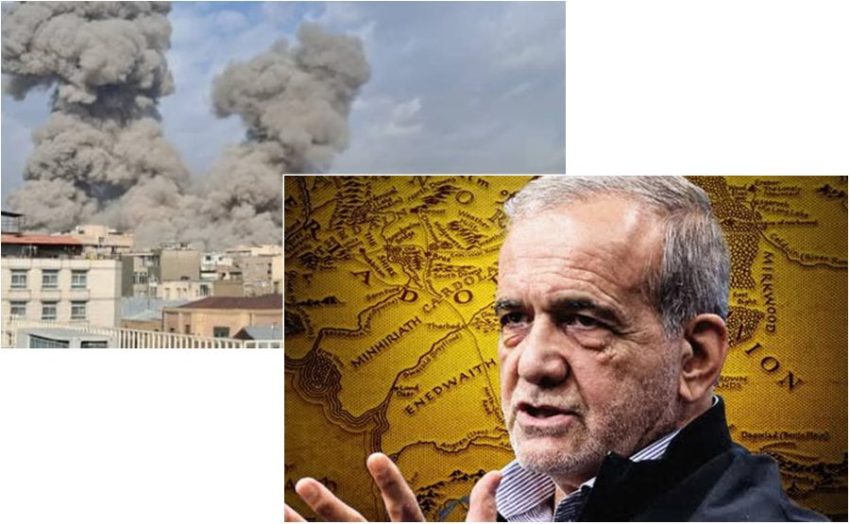
ISLAMABAD – Iranian President Masoud Pezeshkian stepped forward with an unexpected apology, saying the his government regretted strikes that hit neighbouring countries in the ongoing confrontation with Israel and the United States.
It was a rare moment of conciliation in a conflict that has already reshaped regional politics and rattled global markets. Yet even as the apology echoed across diplomatic circles, Iran’s military establishment sent a different signal. The Islamic Revolutionary Guard Corps declared it was watching developments in the strategically vital Strait of Hormuz, challenging the idea of an unchecked US naval presence in the waterway.
The conflict in Middle East intensified as president Pezeshkian apologises to neighbouring nations for Iranian attacks that struck their territories. He said Iran would refrain from further strikes on neighbouring states unless those countries became launch points for aggression against Iran, signalling an attempt to ease regional tensions after missile and drone operations across the Gulf.
Pezeshkian delivered defiant message, saying Iran would never surrender to Israel or the US. He insisted that Iran’s adversaries should abandon any expectation of an unconditional capitulation from the Iranian people, underscoring Tehran’s resolve amid a rapidly expanding regional confrontation.
The war erupted after Israel and United States strikes targeted Iranian territory, killing Iran’s supreme leader, Ali Khamenei. The attacks triggered a wider regional crisis, with Iran responding through missile and drone strikes on Israeli and US-linked assets across the Middle East, particularly in Gulf nations. Despite the apology, Iranian forces continue military operations in what Tehran describes as retaliation for external aggression.
Adding to the volatility, the Islamic Revolutionary Guard Corps issued a bold statement regarding maritime security in the strategically vital Strait of Hormuz, a chokepoint through which a significant share of the world’s oil supply passes. The Guards said they were “waiting” to see whether US naval forces would escort commercial vessels through the waterway, implying potential confrontation if foreign warships increase their presence.
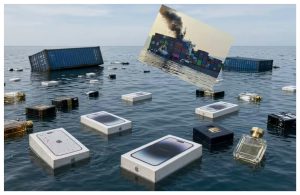
The impact on global trade has been immediate. Maritime traffic through the Strait of Hormuz has slowed dramatically, with reports indicating that only nine oil tankers, cargo ships, and container vessels have crossed the passage since the escalation began.
Given that the strait is one of the world’s most important energy corridors, the disruption raises concerns about potential economic ripple effects far beyond the Middle East.
UAE responds to Iranian Missile, Drone Attacks as regional tensions escalate