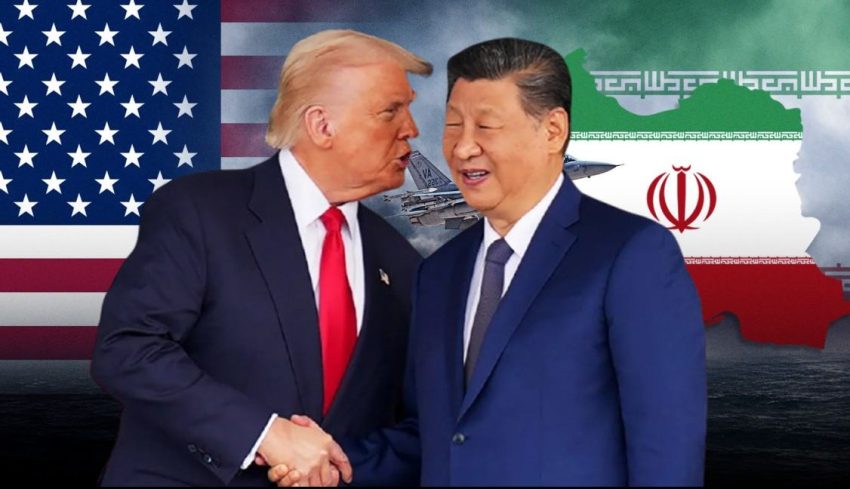
WASHINGTON – US President Donald Trump’s highly anticipated meeting with President of the People’s Republic of China Xi Jinping remained in doubt, as POTUS urgently requested Beijing delay the summit due to war tensions in the Middle East.
With US forces engaged in a growing conflict with Iran, Trump declared he could not afford to leave Washington, asking for the visit, originally set for the end of March, to be pushed back by “a month or so.”
The sudden move sent shockwaves through diplomatic circles, especially as Beijing had been preparing for the visit until the last moment. The summit was expected to be a critical step in stabilizing US-China relations, making its delay a significant geopolitical setback.
Behind the decision lies a rapidly deteriorating situation in the Gulf. The closure of the Strait of Hormuz disrupted roughly big chunk of global oil supply. The fallout has been immediate: surging crude prices, rising fuel costs in the United States, and mounting political pressure just months before crucial midterm elections.
Despite the economic turmoil, Trump struck a defiant tone, calling the financial impact a “very small price to pay” if it prevents Iran from obtaining nuclear weapons. He projected confidence that the conflict would end soon, though he acknowledged it would not be resolved within days.
Adding another layer of intrigue, Trump had hinted earlier that China’s potential military role in the region was a factor weighing on his decision. However, US Treasury Secretary Scott Bessent downplayed that angle, insisting any postponement is purely logistical, driven by the president’s need to oversee wartime operations from Washington.
The delay comes just after high-level US-China trade talks in Paris, led by Chinese Vice-Premier He Lifeng, raising questions about whether broader strategic tensions are beginning to overshadow economic cooperation.
Now, with the summit in limbo, attention turns to the ripple effects, not only on fragile US-China relations, but also on Xi’s expected return visit to the United States later this year, which could now face its own uncertainty.
As conflict rages and diplomacy stalls, the world is left watching a high-stakes balancing act between war and global power politics, where every decision could reshape the international order.
Isolated? Think Again. Why the World’s Emerging Superpower China Stands With Pakistan