
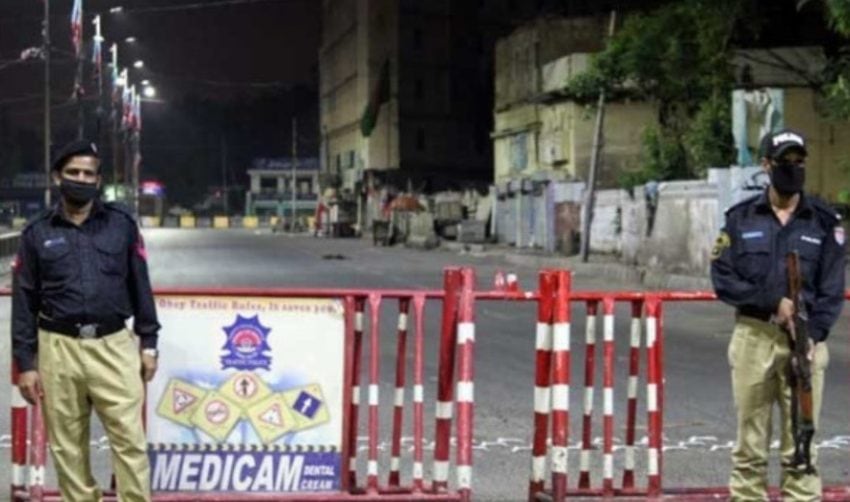
ISLAMABAD – In a key meeting chaired by President Asif Ali Zardari, the government decided not to impose a smart lockdown across the country after facing opposition from the provinces.
According to reports, Prime Minister Shehbaz Sharif held an important meeting with President Zardari at the Presidency. The meeting was attended by Deputy Prime Minister Ishaq Dar, PPP Chairman Bilawal Bhutto Zardari, Interior Minister Mohsin Naqvi, and National Security Adviser Lt Gen Asim Malik.
Participants reviewed the overall national security situation, as well as the changing regional dynamics and their possible impact on Pakistan. Discussions also focused on economic, energy, and security challenges, with consensus reached on adopting a comprehensive strategy to address them.
The forum emphasized the need for coordinated national decision-making and institutional harmony. However, all four provincial chief ministers opposed the imposition of a smart lockdown as part of energy-saving measures, leading to a decision against implementing it.
Officials briefed the meeting that Prime Minister Shehbaz Sharif had repeatedly rejected proposals to increase petroleum prices, and savings from austerity measures were being directed toward public relief.
The government has taken steps including reducing expenditures, cutting the development budget, and immediately halting 60% use of official vehicles.
President Zardari stressed that vulnerable segments of society would not be left alone during difficult times. He directed authorities to ensure coordinated decision-making and improved harmony in the economy, energy, food security, and security sectors.
According to the statement, the president also called for public awareness campaigns to promote reduced fuel consumption, increased use of public transport, and carpooling.
He further directed that all possible measures be taken to reduce the burden of inflation on the public—especially amid pressure on oil and gas supplies, rising energy costs, and the evolving regional situation—with a focus on essential commodities and basic services.
The consultative meeting was attended by the prime minister, leadership of all four provinces, as well as representatives from Gilgit-Baltistan and Azad Jammu and Kashmir. Key federal ministers, including Finance Minister Muhammad Aurangzeb, Information Minister Attaullah Tarar, Law Minister Azam Nazeer Tarar, Planning Minister Ahsan Iqbal, Petroleum Minister Ali Pervaiz Malik, and Economic Affairs Minister Ahad Cheema, were also present.
Chief Ministers Maryam Nawaz (Punjab), Murad Ali Shah (Sindh), Muhammad Suhail Afridi (KP), and Sarfraz Bugti (Balochistan) attended the meeting, along with GB caretaker CM Yar Muhammad and AJK PM Faisal Mumtaz Rathore.
Provincial governments and regional leadership briefed the meeting on measures taken to control inflation, ensure supply of essential items, and minimize public impact.
The forum also reviewed the regional situation and its possible effects on Pakistan’s security, economy, and food security. It was noted that despite the global crisis, timely decisions had ensured uninterrupted fuel supply and sufficient reserves to meet national needs.
Deputy Prime Minister and Foreign Minister Ishaq Dar briefed the participants on Pakistan’s active diplomatic efforts, including recent contacts with leaders of Turkey, Saudi Arabia, and Egypt, as well as discussions with parties involved in the conflict. He also shared details of his upcoming visit to Beijing.
Speaking to the media after the meeting, the KP Chief Minister said no decision was taken to impose a smart lockdown due to differing views among provinces. He emphasized that Pakistan should play a role in promoting peace, as the Muslim world looks toward it during crises.
He added that Pakistan would not become part of any war and stressed that the meeting was convened to address national and global challenges.
The chief minister also said they would not support any decision that increases burden on the public, adding that KP has not been given more than Rs1,375 billion under the NFC Award, while rights of former FATA regions are being compromised.