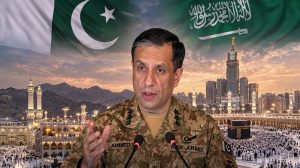
Today Lieutenant General Ahmed Sharif Chaudhry stood before cameras in Rawalpindi and laid out four difficult days for Balochistan. Fifty-four terrorists killed, forty two soldiers and policemen martyred, three coordinated attacks across Hanna Urak, the Mangi Dam checkpoint in Ziarat, and Bela on the N25 highway. “The purpose of today’s briefing is to explain the background of the recent terrorist attacks,” he said, calling it a coordinated campaign of violence in the province.
This is not new behavior from these networks, and the record proves it. In 2009 a BLA leader publicly called for killing non Baloch residents, and roughly five hundred Pakistani civilians were murdered in the years that followed. In August 2024, gunmen stopped buses in Musakhail, checked identity cards, pulled out ethnic Punjabi passengers, and executed twenty three of them on the spot, most were laborers simply trying to earn a living. In March 2025, the Jaffar Express was hijacked in the Bolan Pass, with over four hundred passengers held hostage and dozens killed. Barbers sleeping in Gwadar, a schoolteacher in Kalat shot for opposing separatist propaganda in classrooms, a university professor gunned down, none of these were soldiers. They were ordinary people, many of them Baloch themselves, killed to spread fear.
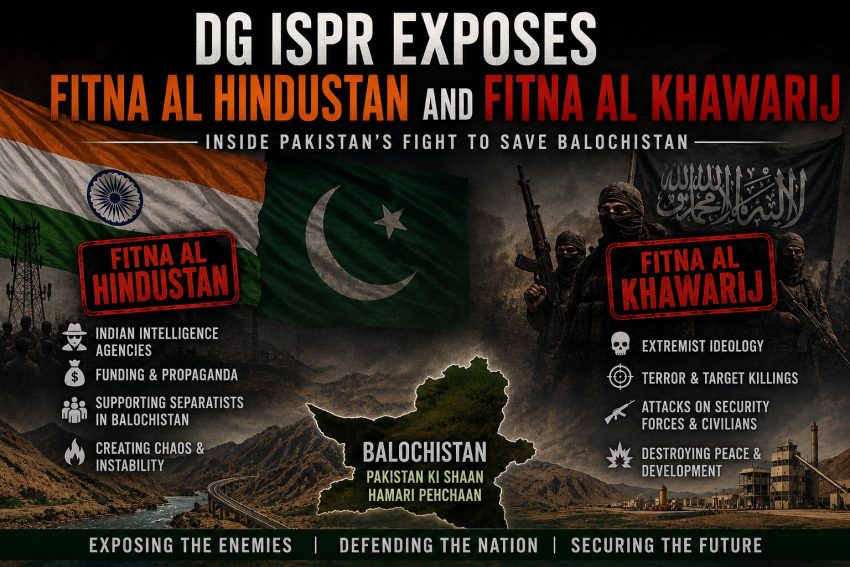
Today’s briefing named the sponsors behind this pattern. Fitna al Hindustan, the Indian backed network operating through the Baloch Liberation Army, was blamed for the ambush on an army convoy at Bela. Fitna al Khawarij, sheltered across the Afghan border, was blamed for storming the police checkpoint at Mangi Dam, where officers were taken hostage. “The facilitation is being provided by the Afghan Taliban regime,” Lt Gen Chaudhry said, adding that most fighters engaged in these operations turned out to be Afghan nationals. He was direct about what this means for ordinary Pakistanis. “This is Fitna al Hindustan and has nothing to do with Balochistan or the Baloch people,” he said, and Fitna al Khawarij “has nothing to do with Islam” either.
These groups keep striking precisely where Pakistan is trying to build. Gwadar port, the Reko Diq copper and gold project, new highways and energy links under CPEC, all represent an active effort by Islamabad and Quetta to turn Balochistan into an economic engine. Chief Minister Sarfraz Bugti has personally courted investors to the province. A functioning highway, a working mine, a stable checkpoint, these are the things a foreign funded insurgency cannot allow to succeed, because peace makes their violence harder to justify.
So what should Pakistan do now. First, keep the military pressure relentless and precise, exactly as promised today, hunting these networks and cutting off the Afghan sanctuary that keeps feeding them fighters and weapons. Second, accelerate the visible economic side just as hard, Gwadar, Reko Diq, and local job programs, so ordinary Baloch families see the state’s investment reaching their own towns, not just headlines in Islamabad. Third, protect every worker and traveler on these highways with better intelligence and faster response, since laborers and commuters have paid the highest price in this conflict for years. Fourth, let local voices, business owners, students, tribal elders, carry the story of what is actually being built, so the contrast between a state creating opportunity and terrorists offering only bloodshed becomes impossible to miss.
Balochistan does not need patience for men who execute bus passengers by their identity cards. It needs the investment and security to finish outpacing them for good.
‘No Place to Hide for militants and we will Hunt You Down, ISPR Chief warns Terrorists