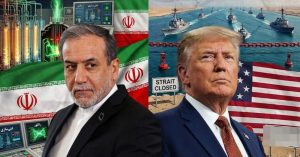

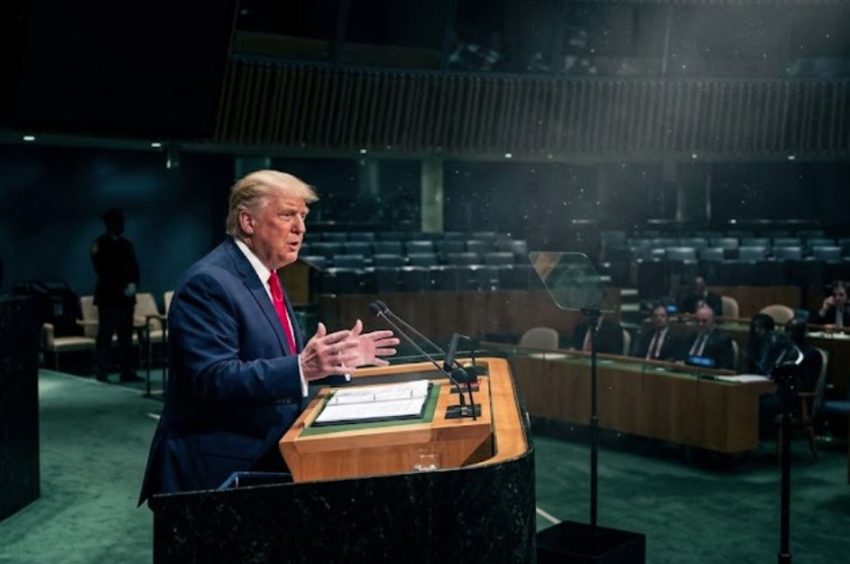
UNITED NATIONS — US President Donald Trump delivered one of his strongest warnings yet to Iran at United Nations General Assembly on Tuesday, blowing Tehran with a stark choice between diplomatic settlement and what he described as the possible destruction of the Islamic Republic.
Trump used the global stage to defend the US military campaign against Iran, insisting that Washington’s actions had prevented Tehran from obtaining a nuclear weapon. He again declared that Iran would not be allowed to acquire one. Calling Iran the former “bully of the Middle East”, Trump said that status had now changed, calling it weak after US confrontation.
The president also pointed to Iran’s missile programme, alleging that Tehran had developed missiles capable of reaching Europe and had taken pride in possessing such weapons.
Trump said Washington had initially tried to resolve the nuclear dispute through negotiations but claimed Iran rejected those efforts. He argued that military action eventually became necessary, presenting the campaign as an effort to prevent a nuclear-armed Iran and strengthen US security.
Trump previously framed his next decision on Iran in similarly stark terms, saying he was weighing whether to “annihilate” the Iranian regime or pursue a deal. At UN, that confrontation remained at the heart of his message as he questioned what could happen if Iran were able to operate under the protection of a nuclear deterrent.
Trump also targeted Hamas during his speech, accusing the Palestinian group of receiving Iranian financial support. He linked Iran’s nuclear ambitions, missile capabilities and regional alliances to what he described as a wider security threat, while portraying US military action as part of a broader campaign against terrorism.
Trump did not limit his address to foreign policy. He opened by highlighting what he described as the strength of the US economy and the record of his administration. “I can report to you with pride that America is back, and our country is stronger today than ever before,” Trump told world leaders.
He was also expected to challenge the influence of the United Nations and other international institutions, arguing that Washington should prevent them from infringing on US sovereignty or advancing policies his administration associates with a left-wing agenda.
The approach follows Trump’s combative appearances at previous UN gatherings, where he sharply criticised other countries over issues including climate policy and migration.
Trump’s speech came as the Middle East remained at the centre of an intense diplomatic push, while the war in Ukraine continued despite repeated US efforts to broker peace. The Iran conflict has also created major economic consequences, particularly for energy markets, while becoming an increasingly important political issue in Washington ahead of the November congressional midterm elections.
At the same time, Tehran has signalled that diplomacy has not completely collapsed. Iran has reportedly offered, through intermediaries, to reopen the strategically vital Strait of Hormuz within seven days if Washington reduces military pressure and lifts its blockade of Iranian ports. Iranian officials have also indicated that their UN delegation has authority to resume negotiations with the United States.
However, Tehran has ruled out a direct meeting between Iranian President Masoud Pezeshkian and Trump in New York, according to reports.
Following his UN address, Trump was scheduled to hold talks with at least 11 foreign leaders through bilateral and group meetings. His agenda included Ukrainian President Volodymyr Zelenskiy, British Prime Minister Andy Burnham, Venezuela’s interim leader Delcy Rodriguez, Danish Prime Minister Mette Frederiksen and Greenland Prime Minister Jens-Frederik Nielsen.
He was also expected to meet representatives from the United Arab Emirates, Saudi Arabia, Oman, Bahrain, Kuwait and Qatar.
Trump had already met French President Emmanuel Macron on Monday, while additional engagements could still be added to his schedule.
Iran Sets 3 Conditions for US Talks as Yemen War spills into Saudi Arabia