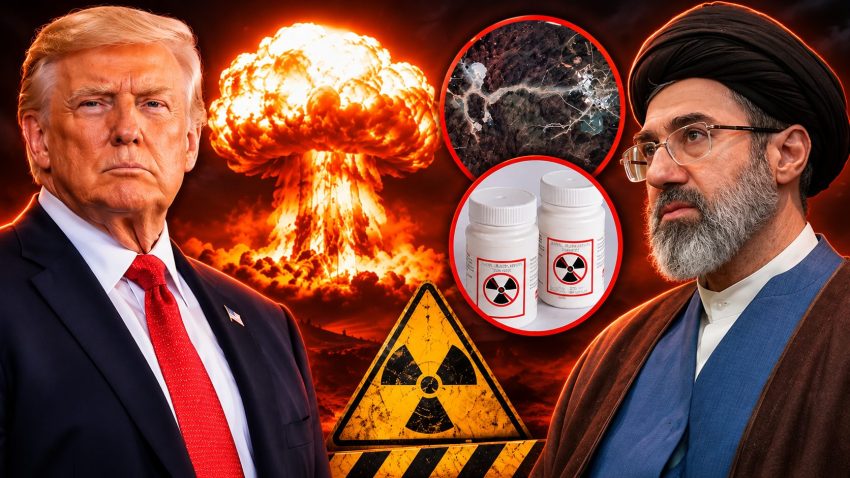
TEHRAN – Fears of potential nuclear emergency returned to spotlight in Iran as authorities distribute tens of thousands of anti-radiation tablets in the southern city of Bushehr, home to the country’s only operational nuclear power plant, against backdrop of escalating tensions with US and renewed military warnings from President Donald Trump.
The large-scale precautionary effort attracted international attention as Washington continues to signal possibility of further strikes against Iranian nuclear installations, raising concerns about the potentially catastrophic consequences of an attack on sensitive nuclear infrastructure.
Although timing intensified speculation, Iranian officials insist that the initiative is part of a longstanding emergency preparedness programme rather than a response to an imminent nuclear strike.
Health authorities reportedly distributed around 180,000 potassium iodide tablets, initially targeting residential areas closest to the Bushehr Nuclear Power Plant before extending the programme across the city. The medication has been made available at comprehensive healthcare centres, where residents can obtain guidance on its use in the event of a radiological emergency.
Officials also outlined age-based dosage instructions and specific timing recommendations to ensure the tablets provide maximum protection if radioactive iodine is released into the environment. The medication is generally most effective when administered shortly before or immediately after exposure, with the recommended protective period extending from approximately 24 hours before potential exposure to four hours afterward.
Residents are advised not to take the tablets unless instructed by health authorities, as unnecessary consumption can carry medical risks. The development has drawn particular attention because Bushehr houses a Russian-designed VVER-1000 nuclear reactor, making the surrounding population a priority in emergency planning.
The precautionary campaign comes as President Donald Trump maintains pressure on Tehran over its nuclear programme, with recent remarks suggesting that Washington retains the military capability to strike facilities that survived previous operations. Around November 1, Trump reportedly indicated that the United States could destroy remaining underground nuclear installations within an extremely short period.
His remarks referenced Pickaxe Mountain, a heavily fortified underground complex near Natanz, also associated with Mount Kolang. Accounts of his statements described possible operations lasting anywhere from ten minutes to approximately one hour, underscoring the administration’s warnings about American military capabilities.
The renewed threats follow military confrontation involving the United States, Israel and Iran that began on February 28, 2026, after an earlier phase of hostilities in June 2025. Despite his threats of further military action, Trump stated around October 16 that he would not use nuclear weapons against Iran, although he did not rule out additional conventional strikes.
Iranian authorities maintain that the Bushehr protection programme was developed before the June 2025 conflict, widely known as the 12-day war. The distribution of iodine tablets is therefore being presented as a continuation of existing public-health measures rather than a sudden indication of an approaching military attack.
Similar preparations were documented earlier in April 2026, while subsequent accounts indicated that the programme had expanded to additional residential areas. Separate reports also claimed that iodine tablets were being distributed within roughly two to three kilometres of other nuclear facilities amid fears of potential strikes.
Iran’s Health Ministry publicly challenged remarks attributed to one of its officials in a report by The Times, denying that the official had provided the reported statements. Bushehr-specific programme, meanwhile, has continued to be reported as an established local emergency measure.
The tablets are designed to address one of the most serious health risks associated with radioactive releases from damaged nuclear reactors. Potassium iodide contains stable iodine, which fills the thyroid gland’s capacity to absorb iodine and thereby reduces the uptake of radioactive iodine entering the body through contaminated air, water or food.
One key dangerous isotope is iodine-131, which has a half-life of approximately eight days and can increase the risk of thyroid cancer, especially among children. Infants, pregnant women and developing fetuses are among the groups requiring particular attention during such emergencies. When administered at the correct time and dosage, potassium iodide can substantially reduce the amount of radioactive iodine absorbed by the thyroid. However, the tablets are not a universal antidote to radiation.
They cannot prevent injuries from explosions, protect against external radiation or neutralise radioactive substances such as cesium and strontium. Their protective role is specifically limited to radioactive iodine, making evacuation planning, sheltering instructions, environmental monitoring and emergency medical services equally important.
What Would Happen if US Attacked Iran’s Nuclear Facilities?
The possible consequences of renewed American strikes would depend largely on which Iranian facilities were targeted. Pickaxe Mountain and other deeply buried enrichment installations are different from operating nuclear power reactors.
These underground sites are designed to withstand substantial physical damage, with layers of rock and reinforced infrastructure providing protection against many conventional weapons.
A successful strike could destroy tunnels, centrifuges, access routes, electrical systems and other critical equipment. It could also cause structural collapse, fires and the release of uranium-containing compounds. Such materials can create chemical toxicity hazards and radiological concerns, particularly for people close to the affected installation.
Underground enrichment facilities generally do not hold the same large inventories of radioactive fission products as operating nuclear reactors. Consequently, bombing an enrichment facility would not normally be expected to produce the extensive radioactive iodine release associated with severe reactor accidents.
An attack causing severe damage to Bushehr’s operating reactor would present a substantially different danger. Unlike uranium-enrichment facilities, nuclear power reactors contain radioactive products generated during the fission process. If a major strike disabled essential cooling equipment and safety systems, the reactor could face serious overheating and core damage.
A simultaneous failure of protective containment barriers could allow radioactive materials to escape into the surrounding environment. Under an extreme scenario, fires, hydrogen-related explosions and other serious industrial incidents could worsen the emergency.
Workers and emergency responders close to heavily damaged areas might face dangerous radiation levels, while an uncontrolled radioactive release could threaten surrounding communities. The greatest immediate public-health concerns would include radioactive iodine exposure and, depending on the nature of the release, contamination by other radioactive substances.
Bushehr’s position along the Persian Gulf introduces another layer of concern. If a major radioactive release occurred, prevailing winds could carry airborne contaminants away from the plant, while rainfall could deposit radioactive particles onto land or water. Marine contamination and the movement of pollutants through coastal environments would depend on the nature of the release and local ocean conditions.
In an extreme incident, environmental effects could extend beyond Iran’s borders, although the extent of any cross-border impact would depend on weather, geography and the volume of radioactive material escaping from the facility. Food safety would become a major consideration, particularly because radioactive iodine can enter the food chain and accumulate in milk.
Three Mile Island accident resulted in comparatively limited radioactive releases, while Chernobyl and Fukushima produced much more extensive contamination and long-term disruption. Modern nuclear reactors incorporate multiple protective systems, but severe deliberate damage to critical infrastructure could compromise those defences.
Any military operation threatening an operating nuclear power station would also raise major questions under international humanitarian law. Nuclear electrical generating stations receive special protections because the release of dangerous radioactive materials could cause widespread civilian suffering.
A serious reactor accident triggered by military action could threaten communities far removed from the immediate battlefield, creating humanitarian, environmental and economic consequences.
Despite growing international attention, there is no confirmed indication in the reported tablet distribution programme that an attack on Bushehr is underway or that a catastrophic radioactive release is inevitable.
As Trump’s military warnings keep Iran’s nuclear facilities under international scrutiny, the distribution of 180,000 anti-radiation tablets has become a stark reminder of the dangers surrounding nuclear infrastructure in a region already shaken by war.
Iran reports attacks on Qeshm Island as Trump issues fresh warnings amid escalating tensions