
ISLAMABAD – Director-General of ISPR Lieutenant General Ahmed Sharif Chaudhry termed former Prime Minister Imran Khan a threat to national security, and it amassed a strong reaction from all circles. The announcement came on Friday during a fiery press conference by an Army spokesperson, who accused PTI chief of having a narrative that endangers the nation, labelling him “mentally unstable”.
ISPR chief warned that Imran Khan’s frustration reached dangerous levels, suggesting he believes “if I am not there, nothing can exist.” The unprecedented tone shows the severity of civil-military tensions, signaling a potential watershed moment in Pakistani politics.
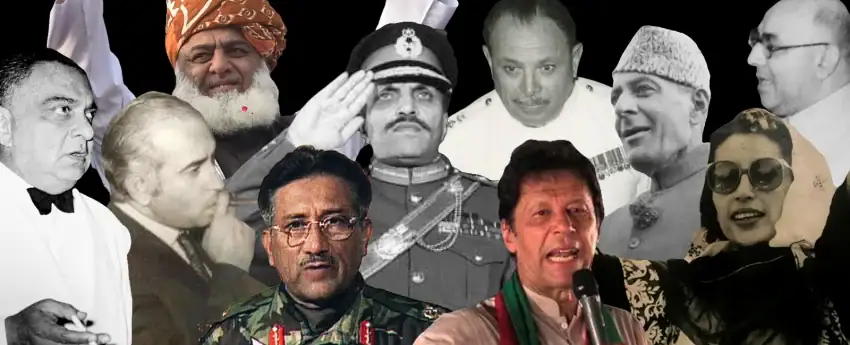
This is not the first time Pakistan’s political leadership has faced accusations of being anti-state. Since independence, the clash between politicians and powerful quarters has remained. Political instability plagued the first decade, weakening constitutional and democratic institutions, leading to the first takeover by Ayub Khan.
Even Pakistan’s founding father, Jinnah, expressed concerns over the political ambitions of army officers like Ayub Khan, saying he knew Khan “was more interested in politics than military affairs.”
When Ayub Khan took power, he launched sweeping crackdown on politicians. His EBDO law banned prominent leaders from politics, while his campaign vilified opponents as traitors, including Fatima Jinnah, who was accused of attempting to divide the country. Pamphlets circulated against her spread claims of treason and conspiracy.
Zulfiqar Ali Bhutto, the architect of Pakistan’s Constitution, was executed, while his daughter Benazir Bhutto faced repeated accusations of being a security risk. During Rajiv Gandhi’s visits in 1988–89, Pakistani intelligence reportedly concluded that Benazir could not be trusted on national security matters, despite diplomatic breakthroughs like the non-attack agreement on nuclear facilities and positive developments at Siachen.
PML-N chief and brother of incumbent PM Nawaz Sharif was also accused of being anti-state or a ‘traitor’, and faced treason cases during Imran Khan’s government. His political rivalry with deep state peaked in October 1999 when he was removed from office, followed by allegations of plotting to hijack planes during Pervez Musharraf’s era.
The tension with Imran Khan escalated since end of PTI government in 2022. Criticism of Army Chief Qamar Javed Bajwa, key electoral disputes, the May 9 unrest, and recent political moves intensified confrontation. Reports indicate meetings with Khan’s family, party leaders, and the new KP Chief Minister have been monitored and restricted.
Meanwhile, politcial observer said declaring someone national security threat is not mere rhetoric; it has far-reaching consequences for politics and society.
Historically, those once labeled as enemies include Hussain Shaheed Suhrawardy, ZAB, Maulana Bhashani, Benazir Bhutto, Nawaz Sharif, and later regained patriotic recognition. Imran Khan now enters this historical and controversial list.
Khawaja Asif back’s DG ISPR’s ‘fiery response’ to Imran Khan