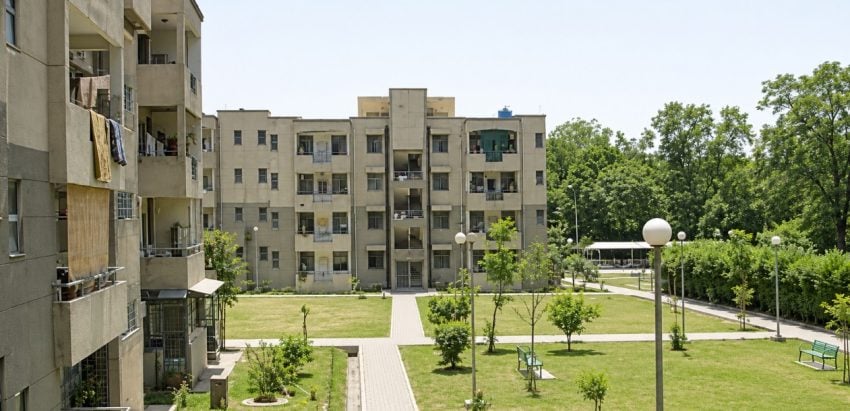
ISLAMABAD – A major government housing scandal rocked federal capital after an investigation uncovered misuse of official residences, with 1,851 out of 2,441 government houses found rented out or occupied by unauthorized individuals.
A report by Special Branch raised concerns as 43,000 federal government employees are still waiting for official accommodation, while thousands of residential units meant for eligible employees have allegedly been occupied, rented out or otherwise misused.
In its findings, investigators claim nearly 76 percent of 2,441 residences are unauthorized occupation or rental arrangements. The remaining 590 properties were reportedly locked, vacant or placed in other categories.
The investigation also reportedly identified government officers associated with questionable allotments, which attract disciplinary proceedings, cancellation of accommodation privileges and legal action.
The latest reveealations brought renewed attention to a problem that has troubled Islamabad’s government housing system for years. Couple of years back, the federal cabinet ordered major investigation into the allocation and occupation of official residences after concerns emerged over illegal subletting, unauthorized construction and properties being retained by individuals who were not entitled to them.
Estate Office, working alongside the Intelligence Bureau, launched a survey in May 2024 to identify violations. The findings were alarming as 4,700 residences were inspected, and investigators identified 313 illegally occupied houses, 193 partially rented properties and 1,125 residences containing unauthorized construction.
A broader government investigation later examined 13,555 residential properties across Islamabad, uncovering extensive irregularities involving official accommodation.
Figures reported are around 1,841 cases of illegal subletting, including hundreds of residences allegedly rented out in full or partially handed over to unauthorized occupants. Among the reported cases, 914 properties were categorized as fully rented out or occupied without authorization, while 382 involved partial subletting. Authorities reportedly pursued recovery measures and issued show-cause notices in relevant cases.
Investigators also identified 2,593 residences involving illegal extensions, encroachments or other unauthorized construction. Some official houses had allegedly been modified for commercial activities, including garages converted into shops and residential spaces transformed into makeshift accommodation facilities.
The reported findings have raised further concerns about whether existing monitoring mechanisms are sufficient to prevent the commercial exploitation of taxpayer-supported residential properties.
Government enforcement efforts have already resulted in the cancellation of more than 2,200 accommodation allotments linked to unauthorized occupation. Individuals involved in such violations were reportedly declared ineligible for future allotments, while recovered houses were gradually returned to the official accommodation pool.
Authorities have also been redistributing available residences through the General Waiting List system, which is designed to allocate government housing according to eligibility and seniority.
Between July 2025 and June 2026, approximately 894 residences were allotted to eligible employees in Islamabad through the merit-based mechanism. However, the continuing discovery of irregularities has intensified scrutiny of the effectiveness of past enforcement campaigns.
In July, FIA registered criminal case against three government officials accused of illegally occupying and renting out government flats in Islamabad’s G-6 sector. The case was initiated following a request from the Capital Development Authority and involved residential properties that had allegedly remained under unauthorized occupation for extended periods.
Islamabad Housing Schemes faces New CDA Crackdown over regulatory violations
Under the Accommodation Allocation Rules, 2002, government employees are prohibited from renting out official residences to third parties. Those found violating the regulations can face cancellation of allotments, eviction, disciplinary action and criminal proceedings where applicable.
Separate investigations uncovered additional construction in 5,691 official residences, highlighting widespread violations of building and accommodation regulations. The largest number of reported cases emerged from G-7, where 4,100 properties were identified with additional structures. Another 1,092 cases were recorded in G-6, followed by 372 in F-6 and 127 in G-8.
Islamabad has approximately 17,400 to 17,500 federal government housing units, while an estimated 43,000 employees remain on waiting lists. The shortage has forced many eligible workers to seek private accommodation, often at considerably higher rental costs.