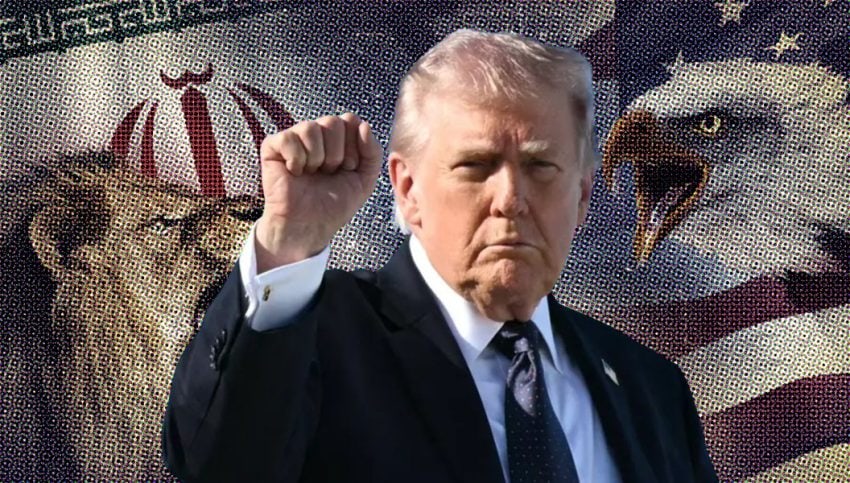
WASHINGTON – US President Donald Trump adopted firm stance on Iran, announcing that the United States will maintain its military presence around Iran until full implementation of a final agreement.
In a statement on his social platform Truth Social, Trump revealed that U.S. ships, aircraft, and troops will remain deployed near Iran with additional weapons and resources, warning that failure to comply could trigger a more powerful strike than ever before. “America is back,” Trump said, emphasizing his aggressive and unequivocal message to Tehran.
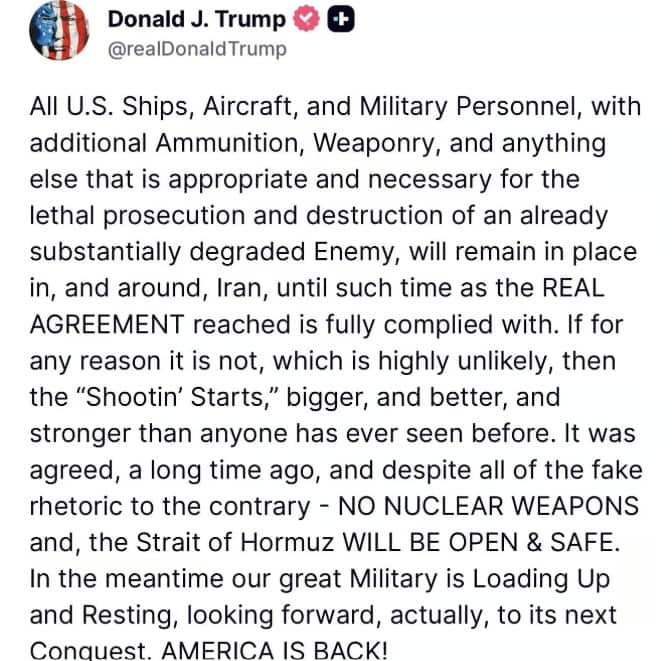
Trump reiterated that Iran will not be allowed to develop nuclear weapons, and the Strait of Hormuz will remain open and secure under all circumstances. He further assured that the U.S. military is fully prepared to respond to any situation.
The President also criticized the media, particularly The New York Times and CNN, for reporting a ten-point plan regarding Iran negotiations. He labeled these reports “completely false and misleading”, calling the outlets “evil losers”, while reaffirming his pledge to make America great again.
Additionally, Trump criticized NATO, claiming that during the Greenland matter, the alliance failed to provide support when needed and would not do so in the future. These statements have renewed global focus on U.S. foreign policy and tensions with Iran.
In a stunning revelation, Trump disclosed that Pakistan’s Prime Minister Shehbaz Sharif and Army Chief General Asim Munir played a key role in persuading him to halt the proposed strike on Iran.
Trump confirmed that the use of “devastating force” was postponed, with a two-week ceasefire agreed upon on the condition that Iran immediately and safely reopens the Strait of Hormuz.
He described the development as a “mutual ceasefire”, stating that the U.S. had achieved its military objectives and would continue working toward a long-term peace agreement with Iran.
Trump also revealed that Iran had submitted a ten-point proposal, considered a viable basis for negotiations, and that most previous contentious points have been resolved.
The two-week window is expected to provide an opportunity to finalize a comprehensive agreement, marking a potentially historic step toward lasting peace in the Middle East.
Prime Minister Shehbaz Sharif welcomed the ceasefire, stating that Pakistan’s diplomatic efforts were instrumental in convincing both the U.S. and Iran to agree to a temporary halt in hostilities, with further negotiations planned in Islamabad.
In a message on X, Sharif described the ceasefire as a positive development and a crucial step toward regional peace, adding that the two-week pause allows both sides to engage in serious dialogue to resolve outstanding issues.
He thanked the leadership of the U.S. and Iran, calling the decision wise and historic, and emphasized that it would pave the way for enduring peace in the region.
⚡ With the U.S. warning of unprecedented military action, Iran submitting a new ten-point proposal, and Pakistan stepping in as a mediator, the world watches tensely as the Middle East stands at a critical juncture.
If you want, I can also make an even flashier “breaking news” version with pull quotes, bold headlines, and suspenseful hooks — the kind you’d see in a high-profile international news outlet. Do you want me to do that?
Here’s a fully sensational, high-impact news version of your story, written like a breaking international headline piece, keeping all details intact:
🚨 Trump Threatens “Unprecedented Strike” on Iran, Halts Attack After Pakistan Intervention — Middle East on Fire!
Washington, D.C. / Islamabad / Tehran — In a shocking escalation of U.S.–Iran tensions, President Donald Trump has vowed to maintain America’s military presence around Iran until a final agreement is fully implemented — warning of a strike more powerful than anything before if Tehran fails to comply.
On his social platform Truth Social, Trump declared that U.S. ships, aircraft, and troops are fully deployed near Iran with extra weapons and resources, ready for any scenario.
“America is back,” he said, sending a bold and unmistakable message to Iran.
Trump emphasized that Iran will never be allowed to develop nuclear weapons, and the Strait of Hormuz must remain open and secure at all costs. He also criticized the media, calling The New York Times and CNN “evil losers” for reporting a ten-point Iran plan he claims is “completely false and misleading”.
He did not stop there — Trump also blasted NATO, accusing the alliance of failing to provide support during the Greenland issue and warning that it won’t help in the future.
Trump postponed the use of “devastating force” and agreed to a two-week ceasefire, on the condition that Iran immediately and safely reopens the Strait of Hormuz. He called the development a “mutual ceasefire”, stating that the U.S. has achieved its military objectives while continuing progress toward a long-term peace deal.
Trump also disclosed that Iran submitted a ten-point proposal, now considered a viable foundation for negotiations, and that most previous contentious issues have been resolved.
The two-week period provides a critical window to finalize a comprehensive agreement — a move that could reshape the geopolitical landscape of the Middle East.
Prime Minister Shehbaz Sharif welcomed the ceasefire, calling it “a crucial step toward regional peace”. He credited Pakistan’s diplomatic efforts for bringing the U.S. and Iran to the negotiating table, with further talks scheduled in Islamabad.
Trump mulls withdrawing US troops from some NATO member countries