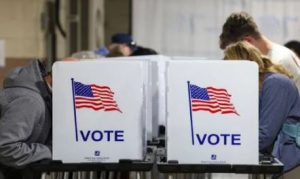
WASHINGTON – US high-stakes midterm elections reached far beyond Earth as three NASA astronauts cast their ballots from International Space Station (ISS), proving that even a mission hundreds of kilometres above the planet is no barrier to participating in democratic process.
While millions of Americans headed to polling stations, astronauts Anil Menon, Jessica Watkins and Luke Delaney exercised their voting rights from orbit, using NASA’s secure communications network to transmit their ballots to election officials back home. The extraordinary voting comes as Americans decided the political balance of Congress for remaining two years of President Donald Trump’s second term, with control of the House of Representatives and key Senate seats at stake.
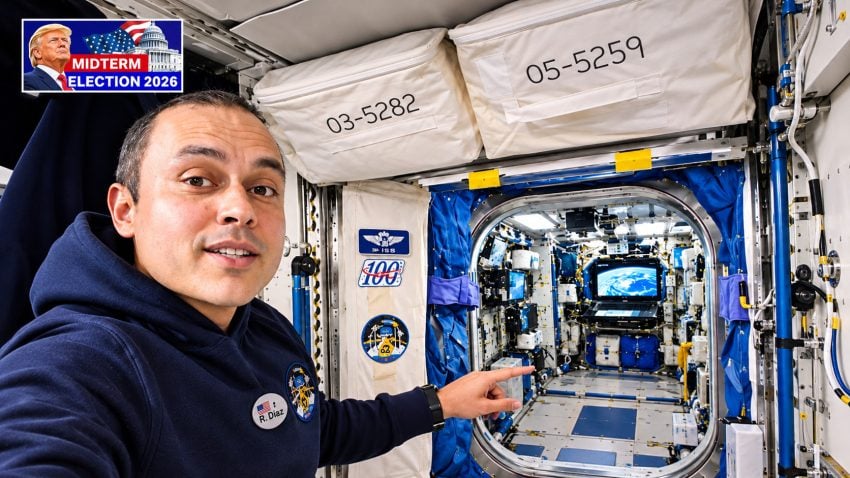
NASA astronaut Anil Menon demonstrated on social media how he cast his ballot for Harris County in Texas, from space.
He was one of three US astronauts aboard the International Space Station who voted in the November 3 midterm elections. https://t.co/XNlxY4pXUc
— Al Jazeera English (@AJEnglish) November 3, 2026
For NASA astronaut Anil Menon, casting a ballot required neither a polling station nor a trip back to Earth. In a video shared on social media, Menon offered viewers a rare glimpse into how astronauts participate in American elections while living and working aboard the orbiting laboratory. Floating through the space station, he revealed that his personal quarters had effectively been transformed into a voting booth.
Anil Menon completed an electronic ballot and sent it to election authorities in Harris County, Texas, which includes Houston, home to NASA’s Johnson Space Center. He described voting from orbit as a privilege, highlighting how astronauts remain connected to civic responsibilities despite being separated from their country by hundreds of kilometres.
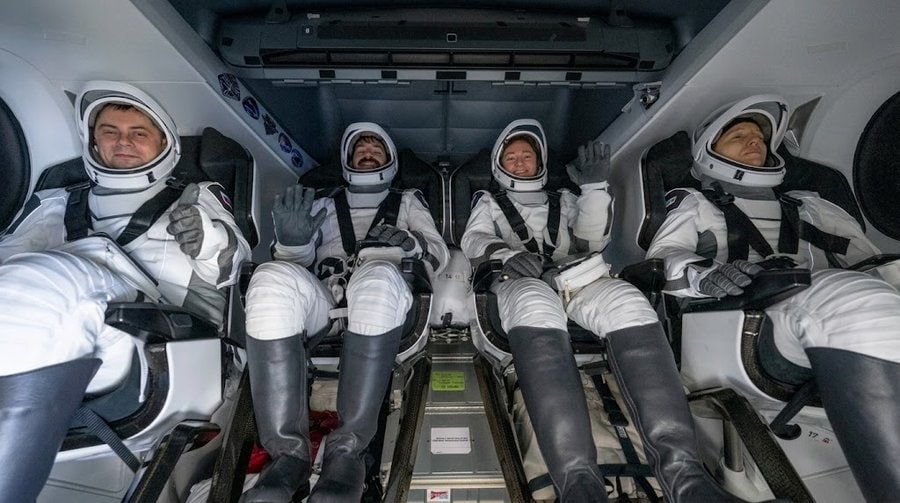
His fellow American crewmembers, Jessica Watkins and Luke Delaney, also participated in the election from the ISS. Menon had travelled to the station aboard Russia’s Soyuz MS-29 spacecraft in July 2026, while Watkins and Delaney arrived in October on a SpaceX mission.
Casting a ballot from space is more complicated than voting at a neighbourhood school, library or election centre, but NASA has developed a system that makes the process possible. Like other Americans unable to vote in person, astronauts can request absentee ballots through a Federal Post Card Application.
Once election officials provide the necessary voting documents, astronauts complete their ballots electronically aboard the space station. The completed ballot is encrypted before beginning its journey back to Earth through NASA’s Tracking and Data Relay Satellite System.
Privacy remains central to the procedure. The encrypted ballot is designed to ensure that only the astronaut and the authorised county election official can access its contents, protecting the secrecy of the vote throughout transmission. This arrangement allows astronauts to fulfil their civic obligations without interrupting their scientific assignments or returning prematurely from space.
Although the spectacle of voting from orbit continues to capture public attention, the practice has existed for nearly three decades. In 1997, Texas lawmakers passed legislation establishing a legal mechanism for eligible NASA astronauts to vote while stationed in space. That same year, astronaut David Wolf made history by becoming the first American to cast a ballot beyond Earth while serving aboard Russia’s Mir space station.
The astronauts’ participation came during a critical electoral test for President Donald Trump, whose Republican Party faced a nationwide contest over the future direction of Congress. November 3 elections included all 435 seats in the House of Representatives, regularly scheduled Senate contests, governorships and numerous state and local positions.
US Midterm Elections 2026: Trump suffers Major Blow as Democrats Sweep Key States