
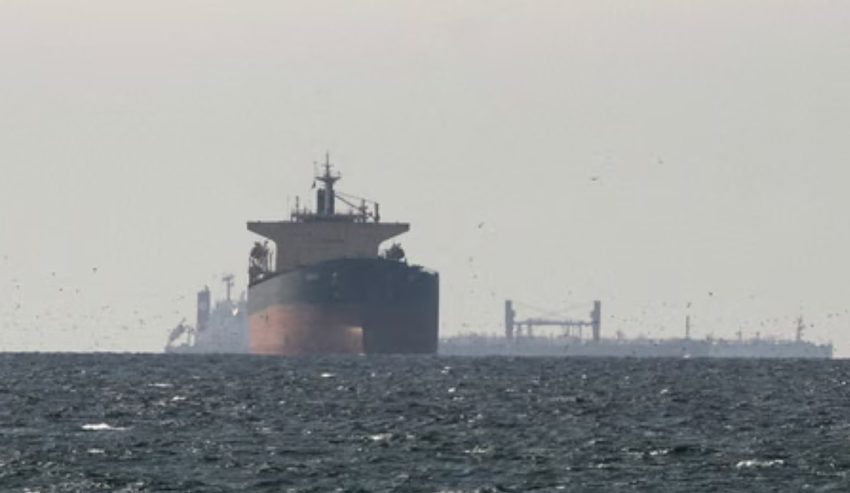
TEHRAN – Strait of Hormuz, one of the world’s most vital oil corridors, remains in global headlines as tensions escalate in the region. Iran is moving beyond simple warnings and toward a more controlled approach to maritime traffic, where access is no longer guaranteed but carefully vetted, negotiated, and in some cases, reportedly priced.
Tehran is reportedly moving toward tightly controlled, highly sensitive system to regulate one of the world’s most critical maritime chokepoints, Strait of Hormuz, raising global concerns over energy security and escalating regional tensions.
According to Lloyd’s List, Tehran is developing a new vetting and registration mechanism for ships attempting to pass through the strait as it shifts toward what analysts are describing as a “selective” blockade. Instead of an outright closure, Iran appears to be allowing passage only for approved vessels, effectively turning the waterway into a controlled gateway subject to political and security scrutiny.
Multiple countries including India, Pakistan, Iraq, Malaysia, and China are reportedly engaged in direct negotiations with Iranian authorities to secure transit permission for their vessels through Iranian territorial waters. So far, approvals have been handled on a case-by-case basis, but the Islamic Revolutionary Guard Corps (IRGC) is believed to be formalizing a structured system that would require advance clearance.
Under the proposed framework, ships would need to submit extensive pre-transit disclosures, including detailed information about vessel ownership and the ultimate destination of cargo. These sensitive details are said to be transmitted to the IRGC through intermediaries operating outside Iran, highlighting a covert and indirect communication network supporting the process.
At the diplomatic level, Iran’s Foreign Minister Abbas Araghchi has recently described the Strait of Hormuz as “open, but closed to our enemies,” signaling a notable shift in tone compared to earlier threats from IRGC officials, who had warned that vessels attempting to pass could be targeted.
In recent days, a newly designated “safe” corridor within Iranian territorial waters has emerged, with at least nine vessels reportedly using this route. In one notable instance, a tanker is believed to have paid around $2 million for passage, though it remains unclear whether similar payments are becoming a broader requirement or isolated cases.
Maritime legal and trade experts have expressed cautious skepticism about the long-term viability of Iran’s approach. Alex Mills, an international maritime law specialist, told Al Jazeera that while the system may provide a temporary workaround for some operators, it introduces new layers of complexity and risk. The requirement for vessels to disclose cargo details, ownership structures, and destinations runs counter to the common practice of minimizing visibility in sensitive regions, potentially increasing exposure during an already volatile conflict.
Global shipping operates on long planning cycles, meaning supply chains cannot easily adjust in response to sudden geopolitical developments. Even if access through the strait becomes more structured or officially available, commercial operators may remain reluctant to reroute vessels unless the economic incentives clearly outweigh the risks.